
Lightweight Nagahama Hon-Ichikoshi Chirimen
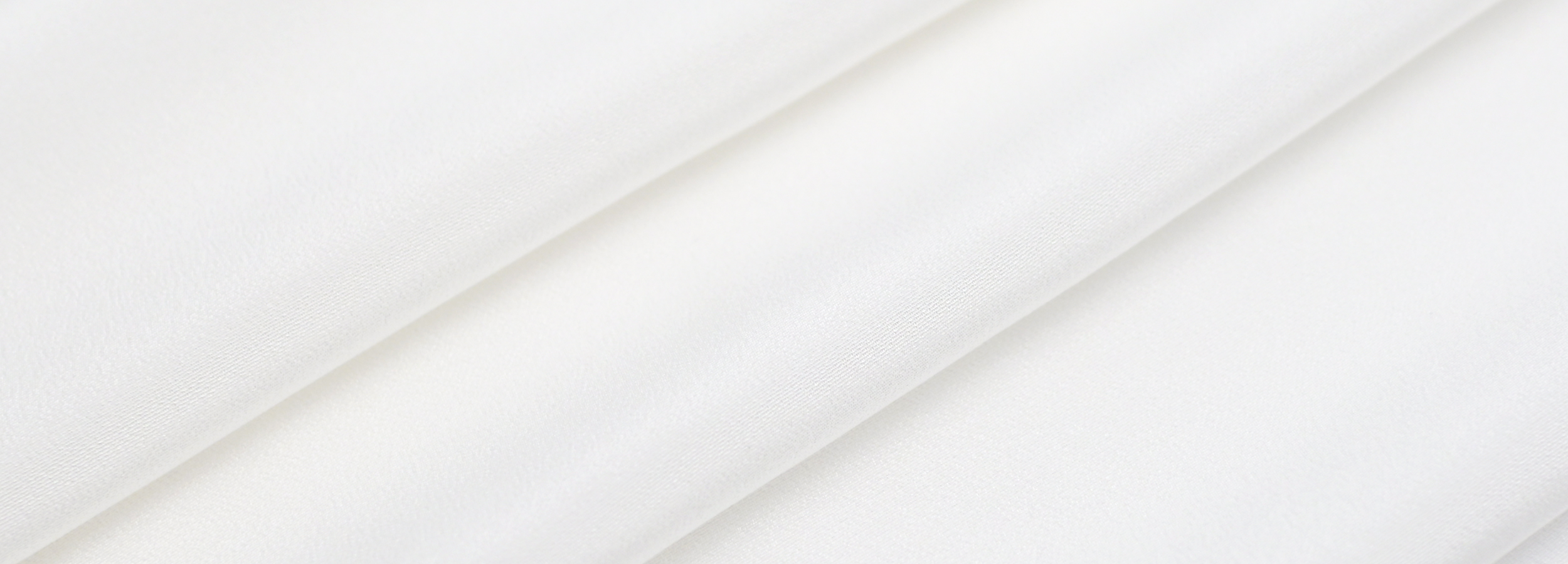
Genuine silk, still woven today.
Nagahama first-class silk crepe, white fabric. From 10cm, as much as you need.
I don't want this silk to die out.
Nagahama, Shiga, was once known as Japan's top chirimen silk crepe production area. With the declining demand for traditional Japanese clothing, the production area has shrunk to an unprecedented degree.
Nevertheless, artisans continue to weave the finest white silk fabrics in Japan.
Even under such challenging circumstances, the quality of the products is truly exceptional. We want as many people as possible to experience this authentic silk.
With that in mind, we developed a completely new hitokoshi chirimen.
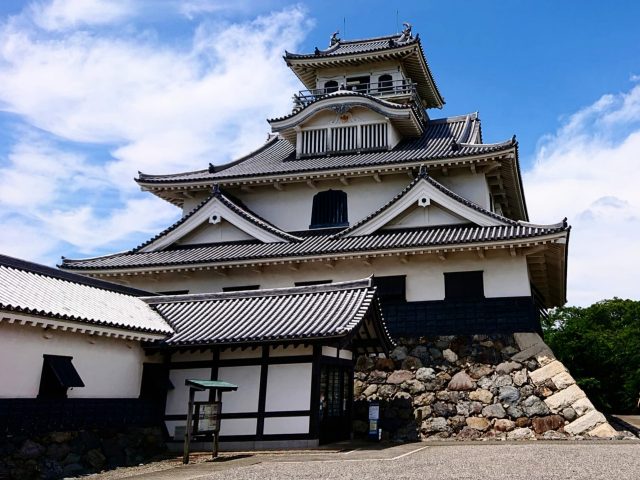
Hama Chirimen Today
From 1.85 million tan to 8,000 tan today.
The art of making Nagahama chirimen boasts a history of approximately 250 years.
It is characterized by high-quality raw silk, tightly twisted threads, and a plump texture.
Nagahama was once a top-tier white fabric production area, where a single weaving mill would handle everything from sourcing and twisting the yarn to weaving and finishing the fabric.
As demand for traditional Japanese clothing declined, production continued to decrease. Now, even with all types combined, annual production is only about 8,000 bolts.
If we look specifically at Ichikoshi chirimen, production numbers plummeted from approximately 600,000 bolts in 1972 to a projected 127 bolts in 2025.
Even so, seven artisans continue to uphold and preserve this top-quality white fabric.
Only white fabrics refined through the cooperative are called "Hama Chirimen."


New Ichikoshi Chirimen
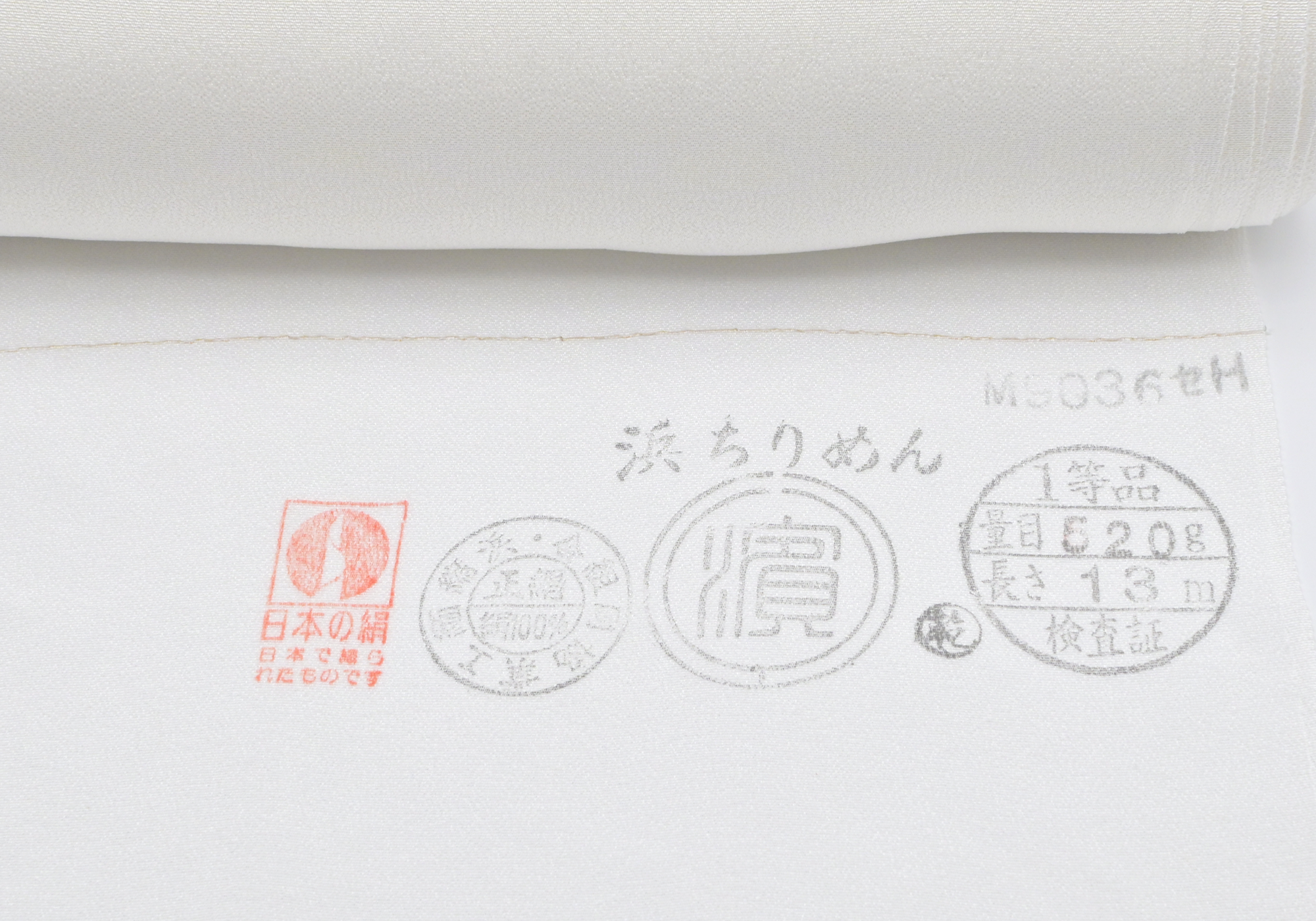
Let's get our hands on some genuine hitokoshi.
In the world of Tsumami Zaiku, "Hitokoshi Chirimen" is a well-known and trusted fabric name.
However, much of the Hitokoshi Chirimen currently available is made from chemical fibers such as rayon or polyester.
What we offer is "Hon Hitokoshi" made from pure silk. It has an elegant luster and feel that only real silk can provide.
And—because it's silk, you can dye it yourself.
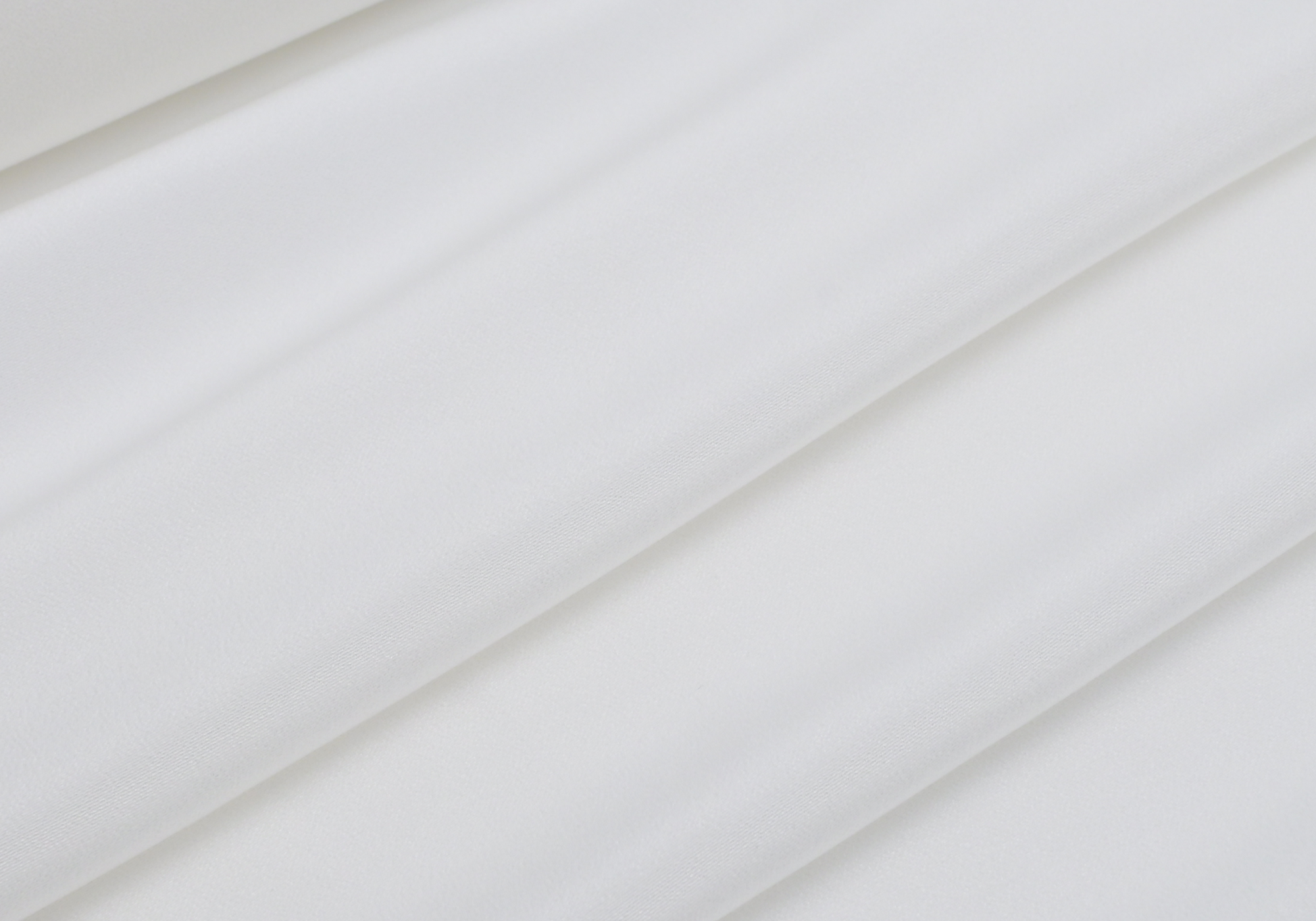
A brand new Hitokoshi, the first in 116 years.
Ichikoshi chirimen originated in Nagahama in 1910.
We couldn't let authentic ichikoshi chirimen disappear.
With that in mind, 116 years after its birth, we created a new ichikoshi chirimen, woven as thinly as possible, specifically for tsumami zaiku.
A typical bolt of ichikoshi weighs approximately 750 grams.
By using finer threads and innovative weaving techniques, we reduced the weight to about 520 grams.
Even at this thinness, the fabric remains stable, a testament to Nagahama's reliable weaving technology.
It's easy to fold and light even when layered.
Each small petal settles beautifully. It's a new form of silk for artisans.
In 2025, only 127 bolts of ichikoshi chirimen were woven in Nagahama.
It is a rare silk, with very little produced even in its place of origin.
New forms for silk fabrics.
Ohari Bako began as a silk thread wholesaler in Nishijin, Kyoto.
Since our founding, we have always worked with silk.
And it is precisely because of our deep connection with silk that we propose this hitokoshi chirimen as a new form of silk fabric.
Not just for kimono, but for everyone who loves handicrafts.
Authentic silk, in just the right amount.
Lightweight Nagahama Hon-Ichikoshi Chirimen (Pure Silk, White Fabric)
100% pure silk (Hon-hitokoshi crepe)
Shiga / Nagahama (Hama Chirimen)
Approx. 38 cm
Approx. 13m (one tan)
One roll: approx. 520g (basis weight approx. 105g/㎡, 24 momme)
27th 9,900 bottles
27th count, 6 threads / 3,300 twists (authentic crepe)
White (undyed; can be dyed to your preferred color)
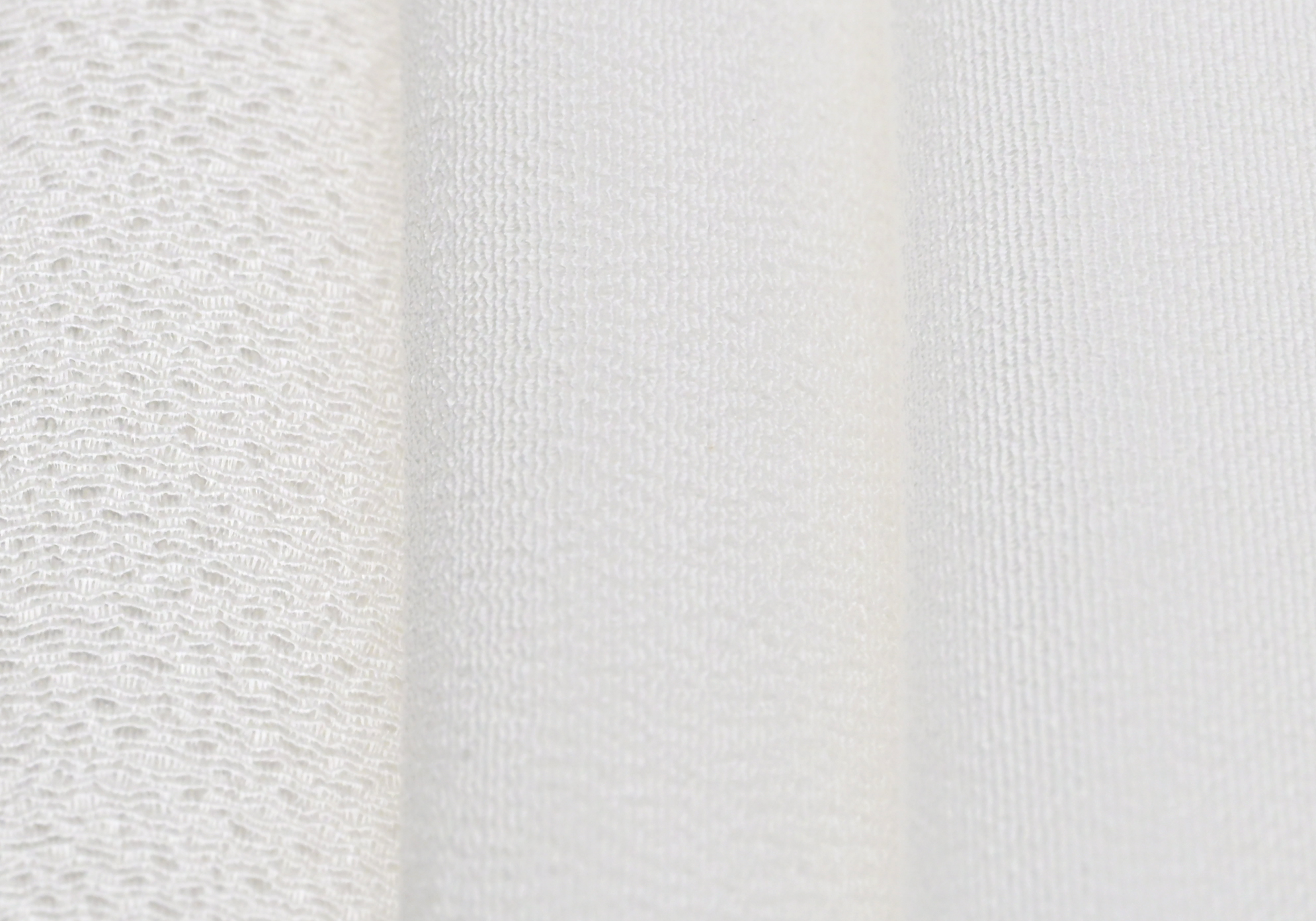
Different in thinness and grain.
Even with the same "chirimen" (crepe), the thickness and texture of the crepe grain (shibo) vary significantly depending on how the weft threads are woven (number of warps crossed).
Oharibako's Ichikoshi is a "light Ichikoshi" woven as thin as possible specifically for tsumami zaiku (folded fabric flowers).
Compared to standard Ichikoshi chirimen (approx. 750-760g), the fabric weight is about 30% lighter (approx. 520g), making it thinner and easier to fold.
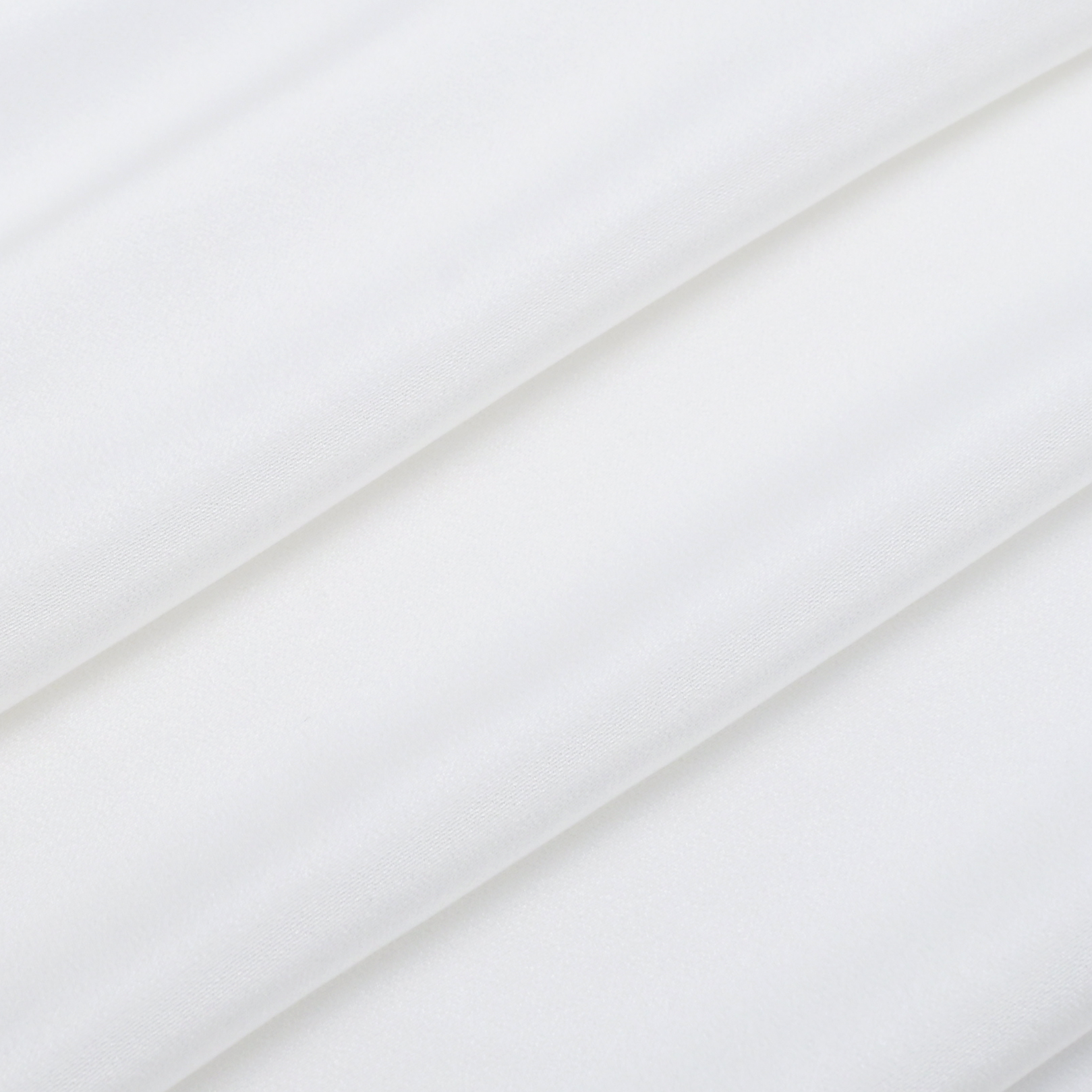
The crepe grain is the finest, and it remains light even when folded multiple times.
Each small petal will be beautifully defined.
*Image shows Kodai Chirimen, Ichikoshi Chirimen, and Light Ichikoshi Chirimen from left to right.
| おはりばこの一越 軽目 本一越 |
従来の一越ちりめん | 三越ちりめん | |
|---|---|---|---|
| 越数 | 一越(軽目) | 一越 | 三越 |
| 重さ | 520g | 750g | 780g |
| 厚み | 極薄 | 薄手 | 厚みがある |
| シボ | 最も細かい | 細かい | はっきりした凹凸 |
| つまみ細工での扱い | 折りやすく軽やか/小花が美しく映える | 折りやすい | ボリューム・存在感向き |
About 30% lighter
Lighter than traditional Ichigoshi chirimen, and thus, thinner.
From 10cm to 1 tan
In increments of 10cm, starting from 30cm, only as much as you need.
Quantity 1 = 10cm.
If you want 30cm, please select "Quantity 3".
Your order will be cut into one continuous piece.
・Selling unit: 10cm increments (specify length by quantity)
・Minimum purchase: From 3 pieces (30cm)

Until June 24th
15% off coupon code
To celebrate the launch, we're distributing a 15% off coupon code on our official LINE account! Please scan the QR code or register via this link. You will receive the coupon code immediately after registration.
Pickup available at 京都本店での受け取り
Usually ready in 24 hours
Nagahama-produced Hon-Hitokoshi Chirimen (lightweight) White Fabric by the Cut - from 30cm
京都本店での受け取り
603-8215
京都府 京都市 北区紫野下門前町25
Japan
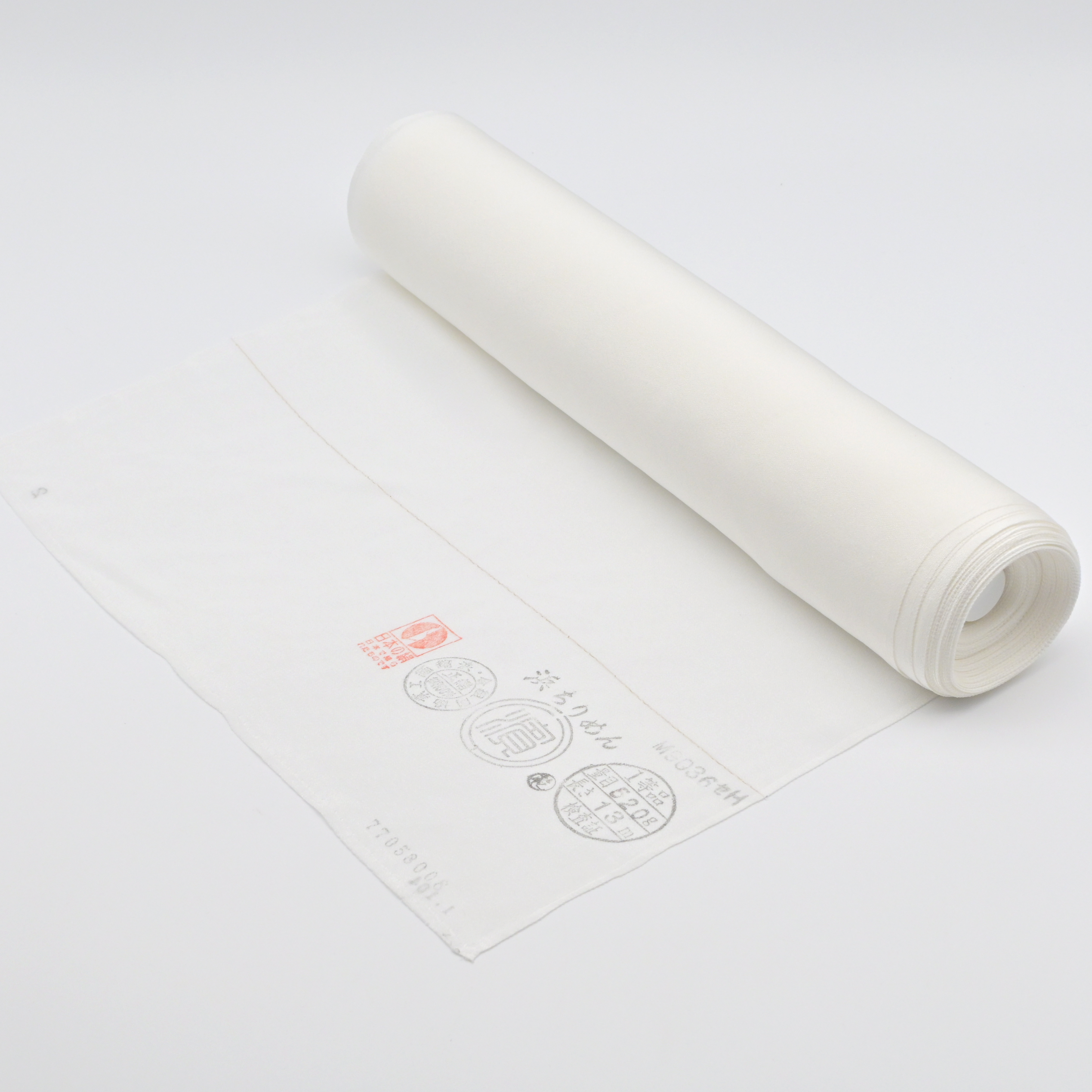
白雪(しらゆき)ちりめんー 滋賀・長浜の「本一越」正絹白生地。つまみ細工のために軽く織った、おはりばこのオリジナルです。
予約販売は終了しました。在庫がございますので、ご注文後1〜3営業日以内に発送いたします(水曜定休)。
今も織り継がれる、本物の絹。滋賀・長浜の正絹 一越ちりめん、白生地の一反です。
その一越、本物の絹ですか
つまみ細工の世界で「一越ちりめん」は、よく知られた信頼のある生地の名前です。けれど、いま出回っている一越ちりめんの多くは、レーヨンやポリエステルなど化学繊維のもの。
私たちがお届けするのは、正絹の本一越です。本物の絹だからこその上品な光沢と手触り。絹は発色が澄み、化繊より縮みにくい。そして白生地ですから、ご自分の手で思いどおりの色に染めていただけます。
長浜の絹を、絶やさないために
滋賀・長浜は、かつて日本一の縮緬の里でした。約250年の歴史を持ち、糸を仕入れ、撚り、織り、仕上げるまでを一軒の機屋が一貫して手がける、最高級の白生地の産地です。
和装の需要が細り、産地はかつてないほど小さくなりました。いまは全種類を合わせても年に約八千反。それでも七軒の作り手が、最高峰の白生地を織り続けています。組合の精練を経た白生地だけが「浜ちりめん」と呼ばれます。
これだけ厳しい状況でも、ものは本当に素晴らしい。この本物の絹を、一人でも多くの方に知ってほしい。その思いから、この白生地の取り扱いを始めました。
商品仕様
- 寸法:一反 約13m × 幅38cm(つなぎ目のない一反でお届けします)
- 素材:正絹100%(本一越ちりめん・白生地)
- 産地:滋賀・長浜(浜ちりめん)
- 単位:1反
- お取り扱い:京都 おはりばこ
反物一反ではなく、必要な分だけの切り売りもご用意しています。
Pickup available at 京都本店での受け取り
Usually ready in 24 hours
Karu-me Nagahama Hon-hitokoshi - 1 tan
京都本店での受け取り
603-8215
京都府 京都市 北区紫野下門前町25
Japan
Data source
The production volume and other figures stated on this page are based on the following publicly available documents:
・Production volume of Nagahama chirimen, production volume by type (including hitokoshi chirimen) / number of cooperative members
Shiga Prefecture, "Shiga Prefecture Industry (Statistical Data)"
・Production trends of the Nagahama textile producing region, and production of hitokoshi chirimen
(As of 2006: approximately 2,444 tan, with virtually one company producing hitokoshi chirimen in the region)
Kagami Shiho, Yokoyama Takeshi, Ono Naotatsu
"A Study on the Characteristics and Conditions of Existence of the Nagahama Textile Producing Region
—Through a Comparison with the Tango Textile Producing Region—"
Journal of the Japan Silk Society, Vol. 16 (2007) pp. 57–63
・Definition, scouring, and general overview of "Hama chirimen" and the latest production volume of hitokoshi chirimen
Hama Chirimen Industrial Cooperative, "Hama Chirimen Production" statistics
(Hitokoshi chirimen: 127 tan annually in 2025)