
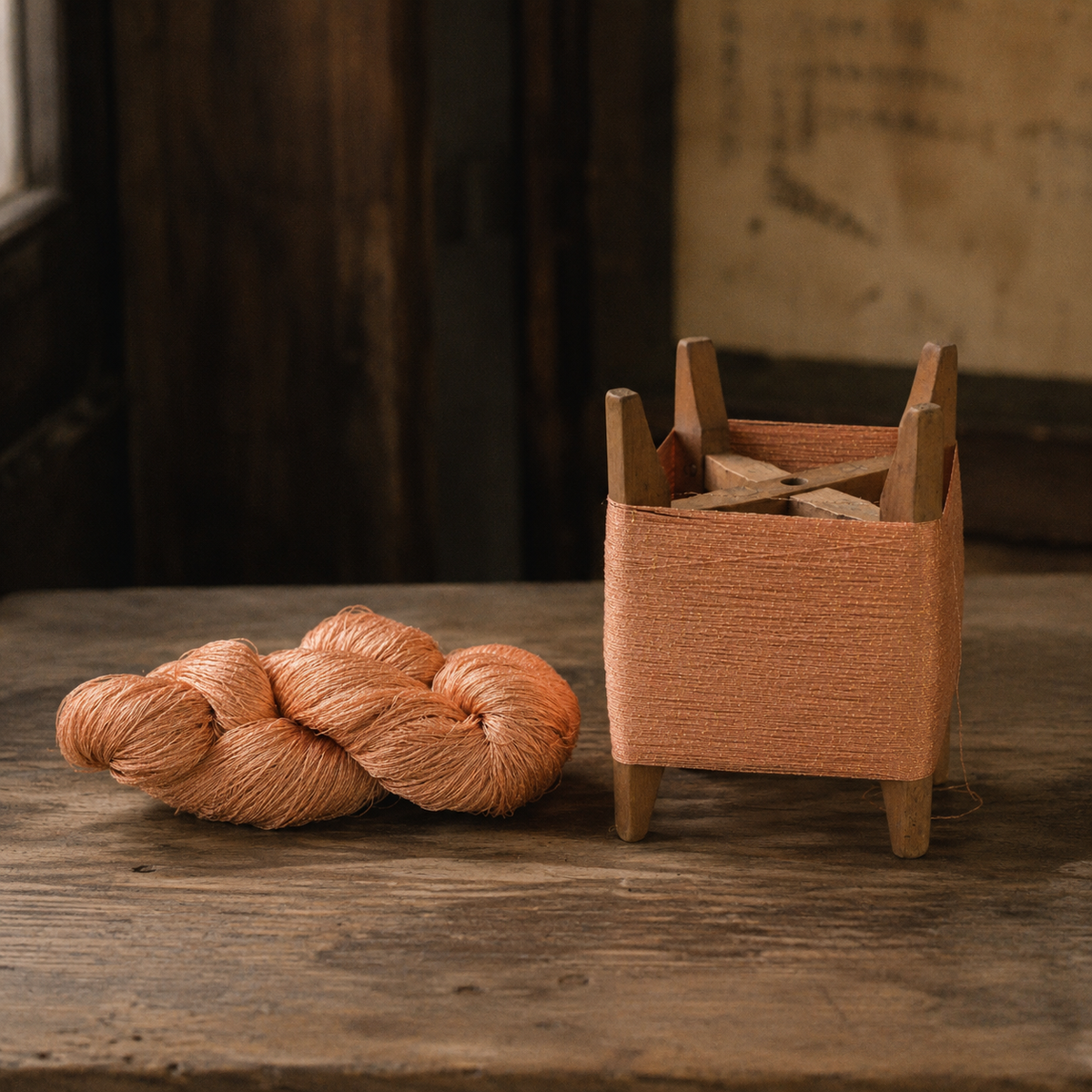
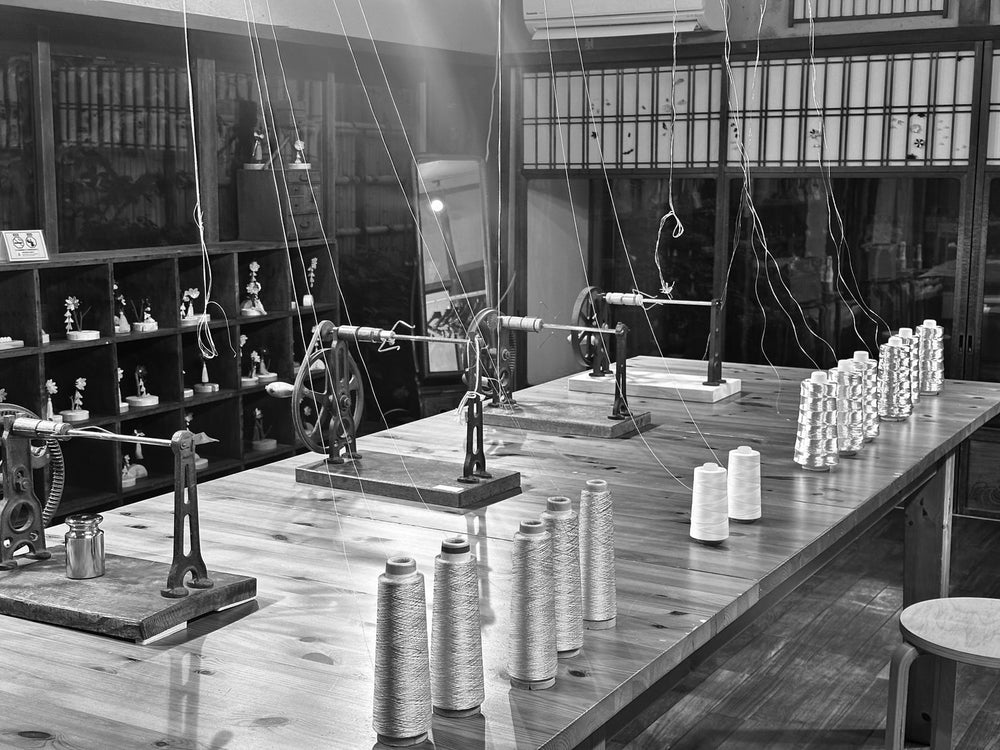
西陣の糸問屋だった頃の仕事場
ORIGIN
西陣の糸問屋から、
始まった。
創業者である祖父は、京都・西陣で絹糸の問屋を営んでいました。扱うのは絹糸だけ。高級な西陣織に使われる糸を、京都じゅうの職人へ届ける仕事です。
やがて組紐、帯締め、そしてつまみ細工へ。かたちは変わっても、素材を見る目だけは、この家業から受け継いだものです。だから私たちは、いまも生地を選ぶところから仕事を始めます。
HISTORY
受け継がれてきた歩み
京都・西陣のものづくりとともに歩んできました。受け継いだ技術を大切にしながら、時代に合わせてかたちを変えています。
北井商店 創業
初代・北井寅男が、京都・西陣で絹糸の問屋を始める。和装文化に関わるものづくりの出発点。
帯締めの加工を開始
伝統的な帯締めや組紐の加工を手がけ、細やかな手仕事の技術を磨く。
新しい晴れの日の髪飾りを開発
先代・北井とき子が、組紐の技術と西陣織を掛け合わせた髪飾りを生み出す。糸問屋から、和装小物を幅広く手がけるメーカーへ。
つまみ細工の制作を開始
祇園や嵐山の老舗和装小物店との取引が始まる。これまでにない意匠のつまみ細工が好評を得る。
「京都 おはりばこ」開店
実店舗を構える。職人の手仕事を、直接お客様へ届ける場所が生まれる。
現在の場所へ移転
店舗・工房・オンラインショップを一箇所に統合。離れを教室と体験の場として開く。
絹の手しごとを、世界へ
髪飾りの製造販売に加え、体験や教室、インテリアやアートを通して、つまみ細工を国内外へ伝えています。
CRAFT
一枚の布から、一輪の花へ。
染め、糊張り、裁断、つまみ、組み上げ。ひとつの髪飾りができるまでに、五つの手が入ります。機械では出せない微細な調整を、布の呼吸を感じながら重ねていきます。
- 01
生地を染める
白生地を、京染の職人に染めてもらいます。同じ赤でも、染屋によって沈み方が違う。使いたい色を伝え、上がってきた絹を見て決めます。
- 02
糊を張る
染め上がった絹を、糊板に張って乾かします。この一手間で、絹はつまめる張りを持ちます。市販の糊では条件が合わず、京都の糊屋に頼んで専用の姫糊を炊いてもらっています。
- 03
裁断する
一輪の花に、何十枚もの花びら。定規とカッターで、寸分たがわぬ大きさに裁ちそろえます。
- 04
つまんで、花びらにする
ピンセットで一枚を折り、たたみ、花びらのかたちにする。丸つまみ、剣つまみ。この所作が「つまみ細工」の名の由来です。
- 05
組み上げる
一枚ずつ台に載せ、重ね、咲かせていく。一輪ができあがるまでの時間が、そのまま作品の値打ちになります。

01生地を染める

02糊を張る
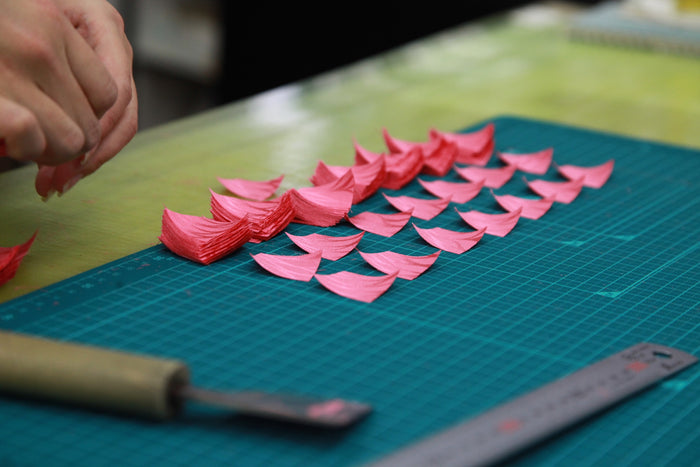
03裁断する
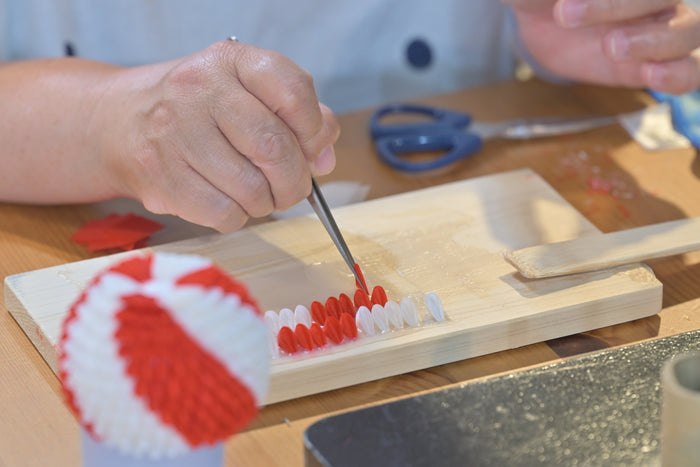
04つまんで、花びらにする
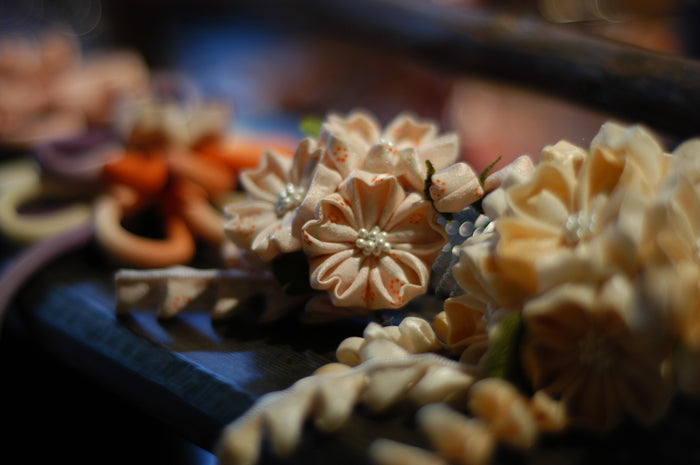
05組み上げる
SILK
絹に始まり、絹に終わる。
つまみ細工の教室では、たいてい「どう折るか」から教わります。私たちは「この絹は何か」から始めます。糸問屋の家に生まれた店だからこそ、そこだけは省けません。
絹はもともと、生きていたものです。それを、枯れない花に変えて残す。だから一枚も無駄にしない。私たちにとって技術は、絹を敬うための手段です。
ORIGIN産地を知る
この絹がどこから来たのか。長浜の織元、生地の重さ、織りの違い。顔の見える絹だけを使います。
NO WASTE無駄にしない
裁ち落とした端切れも、粗末にはしません。捨てない工夫を、工程のなかに組み込んでいます。
PRESENCE触れて感じる
折る前に、まず絹に触れる。手のひらで確かめるその「間」が、手仕事の芯にあります。
OUR HANDS
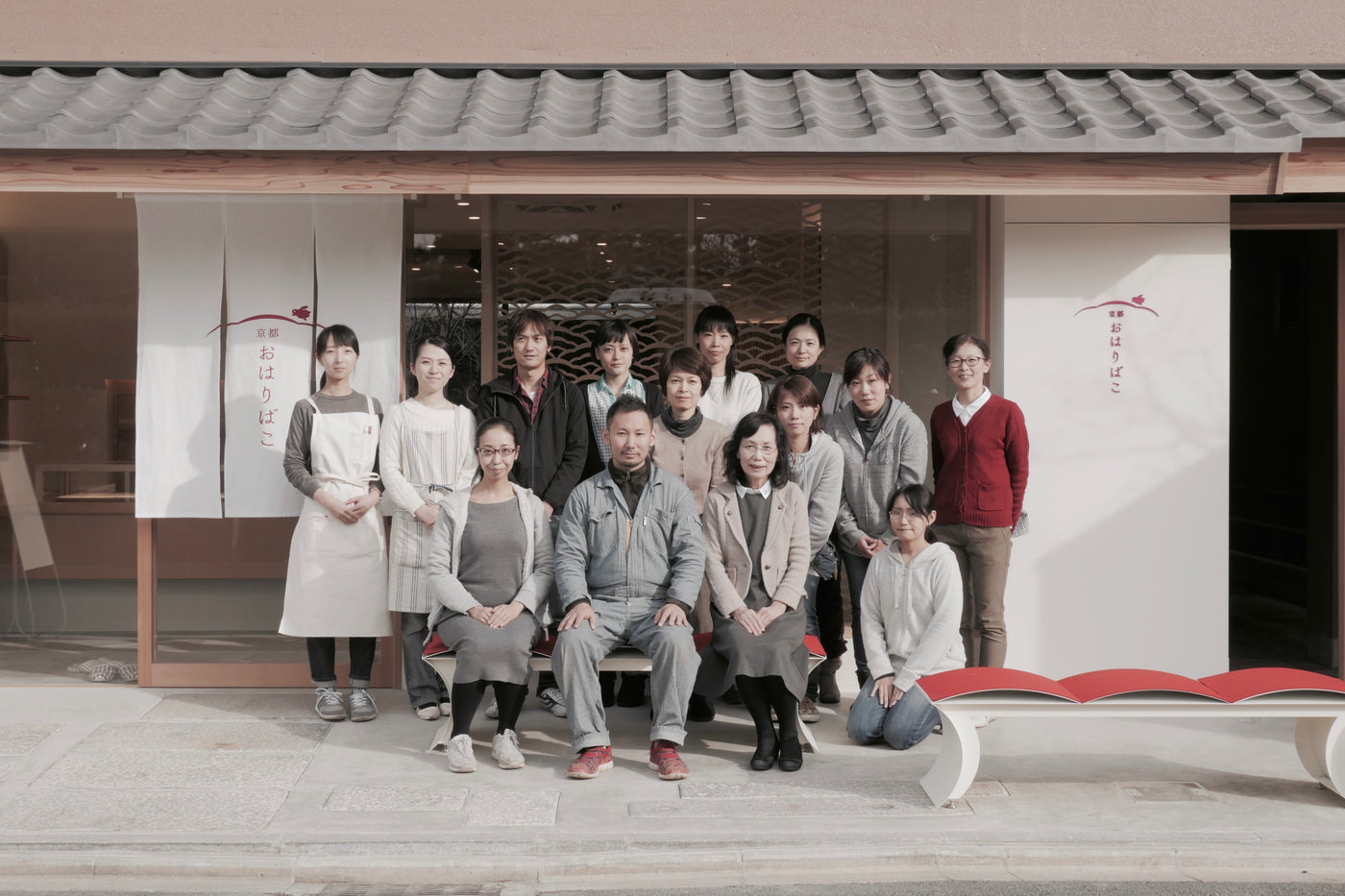
つくる人が、店にいます。
紫野の店の奥が、そのまま工房です。裁断から組み上げまで、ここで手を動かしている者が、店先にも立っています。お客様の髪に合わせながら、「これはこう作ったんです」と話せる。そういう店であり続けたいと思っています。
STORE
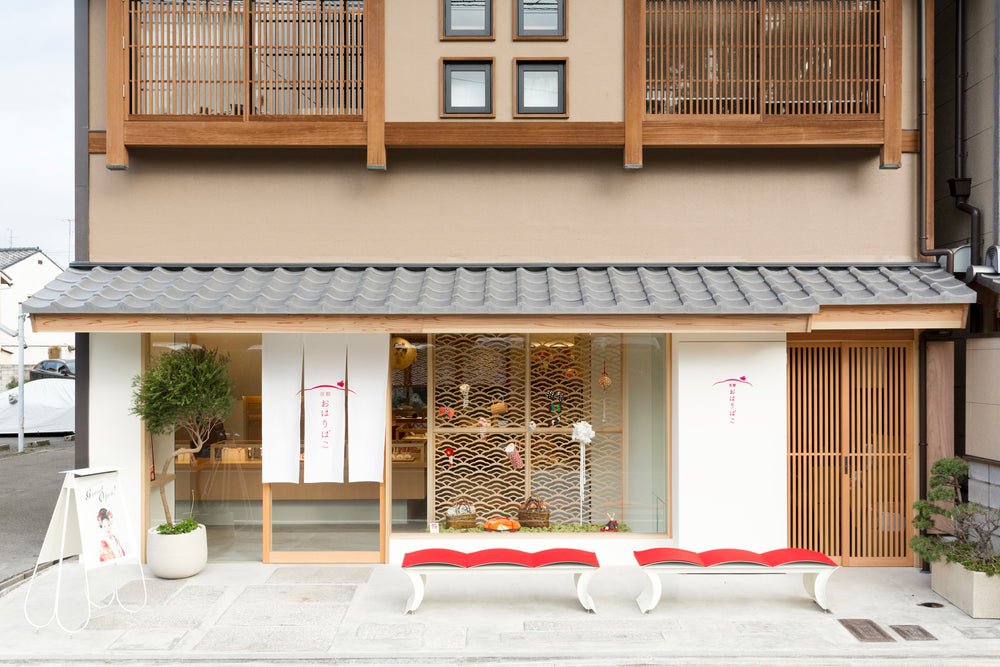
大徳寺のそば、
紫野の店。
壁一面のかんざしは、すべて手に取って、鏡の前で合わせていただけます。写真ではわからない絹の光沢と大きさを、どうぞ確かめにいらしてください。
- ADDRESS
- 京都市北区紫野下門前町25
市バス「大徳寺前」から徒歩3分 - HOURS
- 10:00〜17:00 水曜定休
Tel 075-495-0119
NEXT
つまみ細工を、次の世代へ。
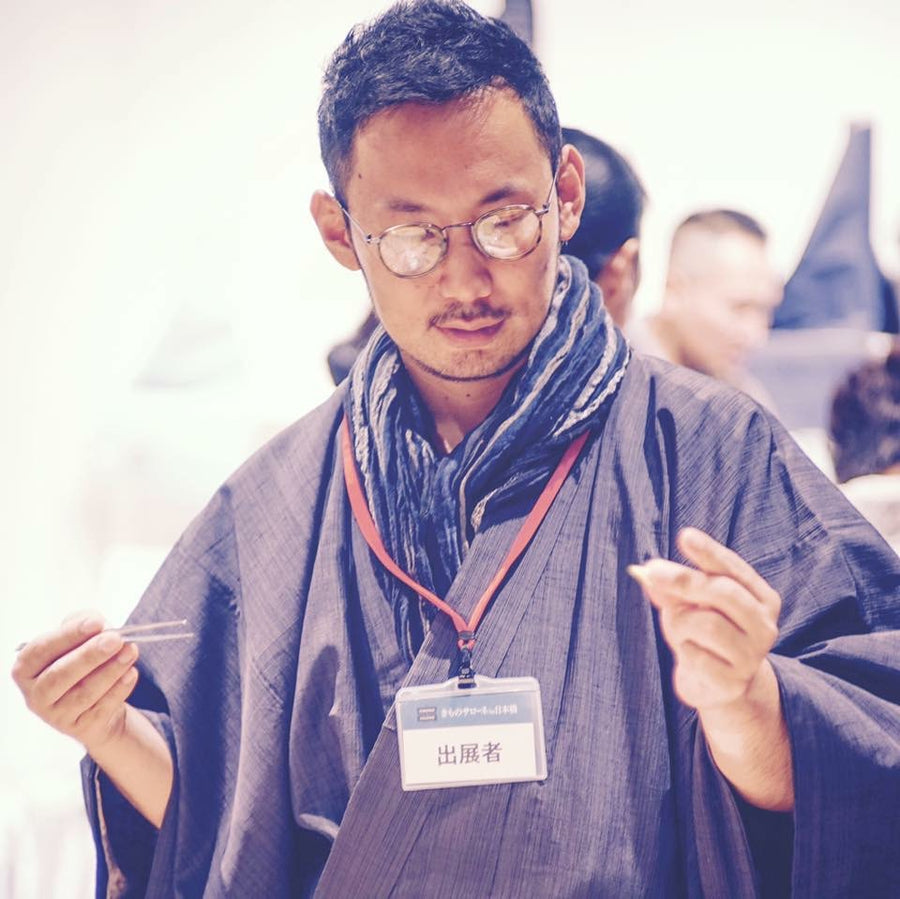
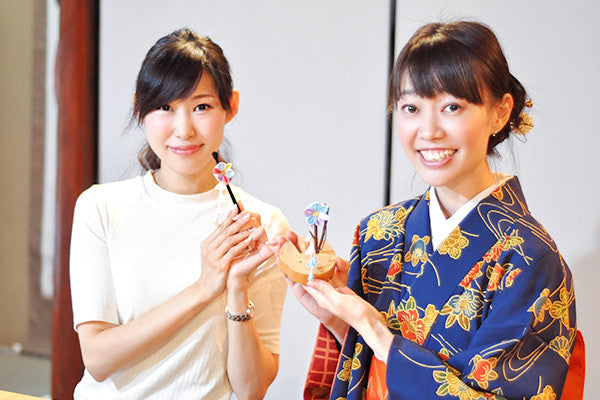
伝統を守ることと、次へ伝えることは、私たちにとって同じ仕事です。京都・東京・オンラインの教室と、手ぶらで参加できる体験を開いています。
COMPANY
会社概要
- 商号
- 株式会社北井(京都 おはりばこ / Kyoto Oharibako)
- 創業
- 1945年(昭和20年)
- 代表取締役
- 北井 秀昌
- 所在地
- 〒603-8215 京都府京都市北区紫野下門前町25
- 電話
- 店舗(試着・ご来店)075-495-0119
オンラインショップのお問い合わせ 075-495-8100
受付時間 10:00〜17:00 水曜定休 - 事業内容
- つまみ細工・和装小物の製造販売/つまみ細工教室・体験の運営/衣装レンタル・撮影・空間貸し