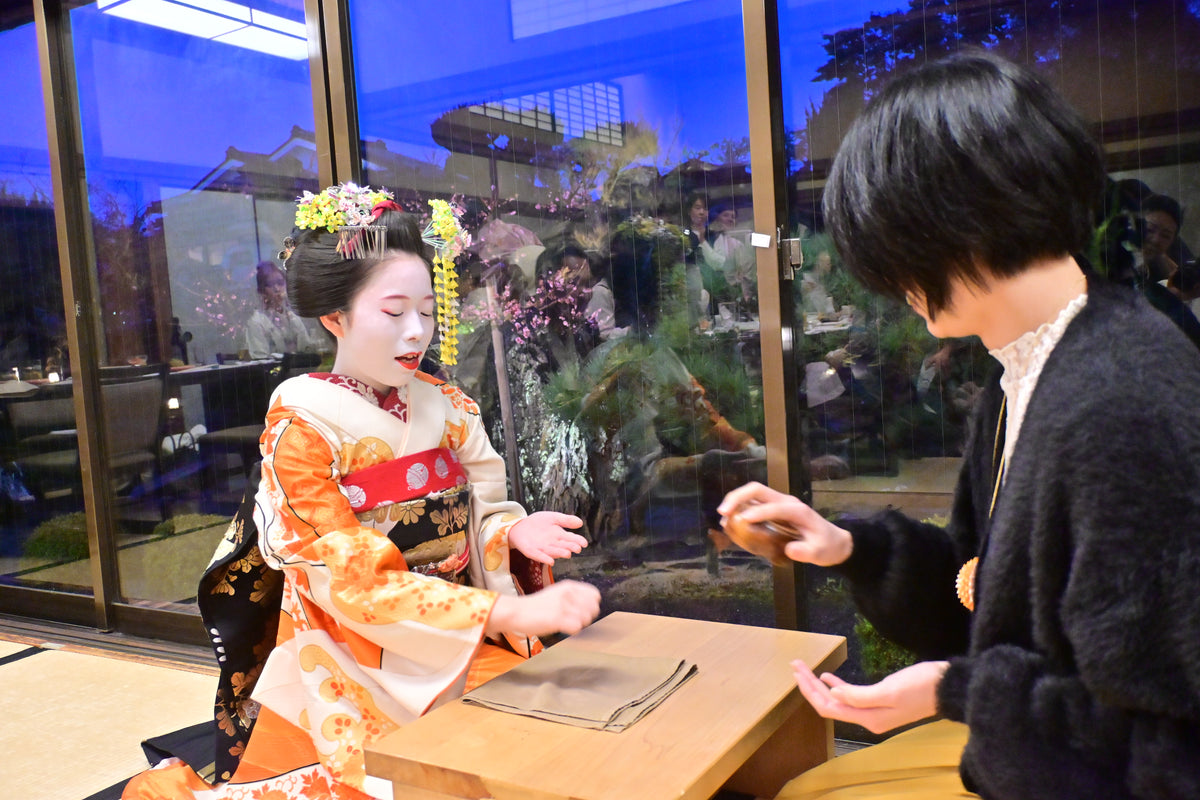
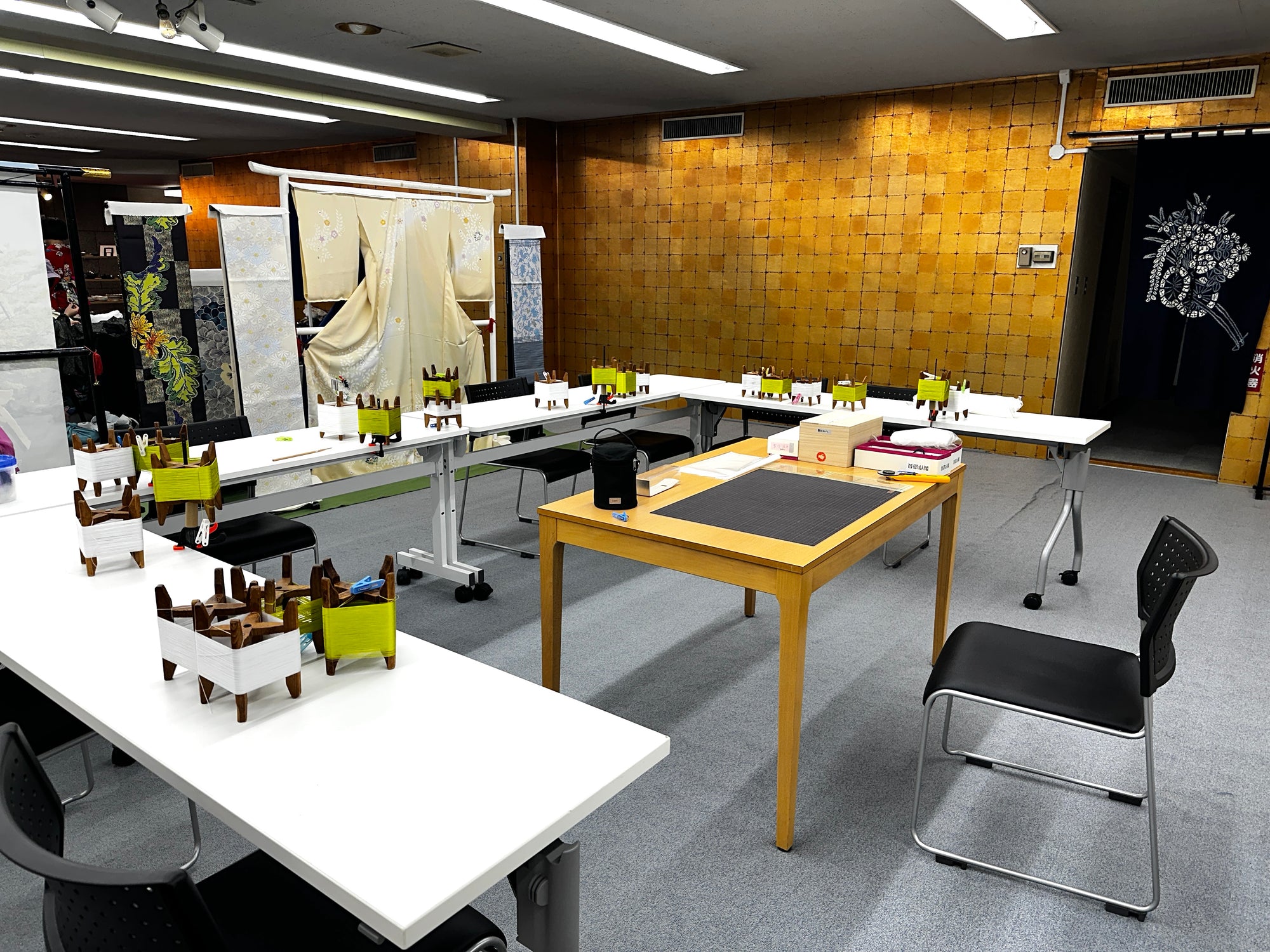
Lecturer Profiles
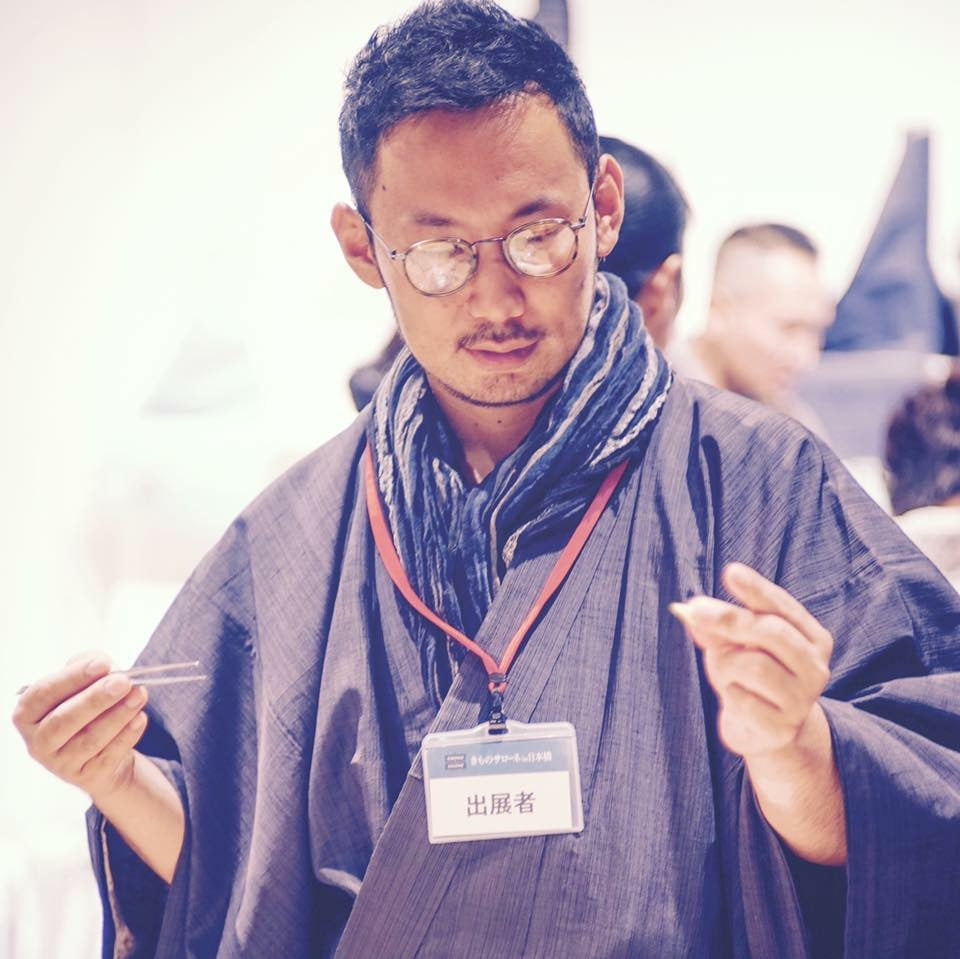
Hidemasa Kitai, CEO of Oharibako
I was born into a family that has lived with pure silk, as my grandfather ran a silk thread wholesale business in Nishijin, Kyoto.
From kumihimo and obijime to tsumami zaiku.
The dedication to materials passed down through three generations and the respect for Kyoto's decorative culture form the foundation of my work.
For over 10 years, I have taught tsumami zaiku to more than 300 students in Kyoto and Tokyo.
What I teach is not "techniques learned from a teacher."
It is the practical techniques of a craftsman, honed daily in this workshop.
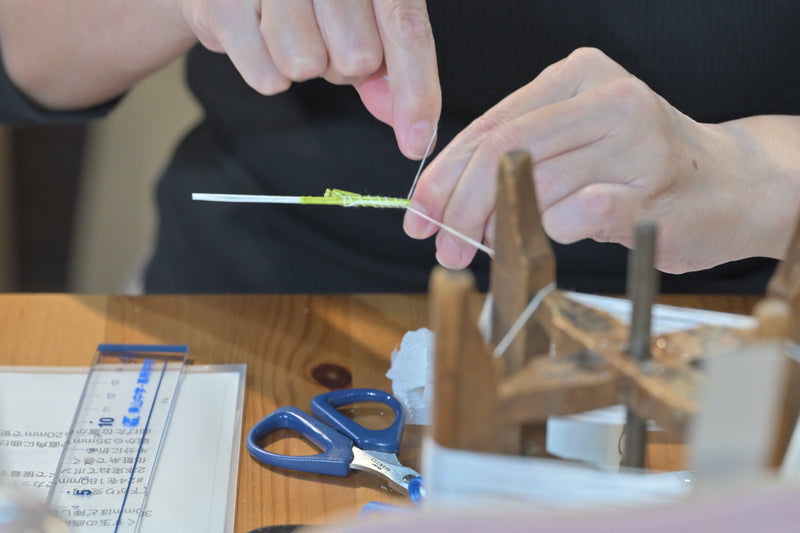
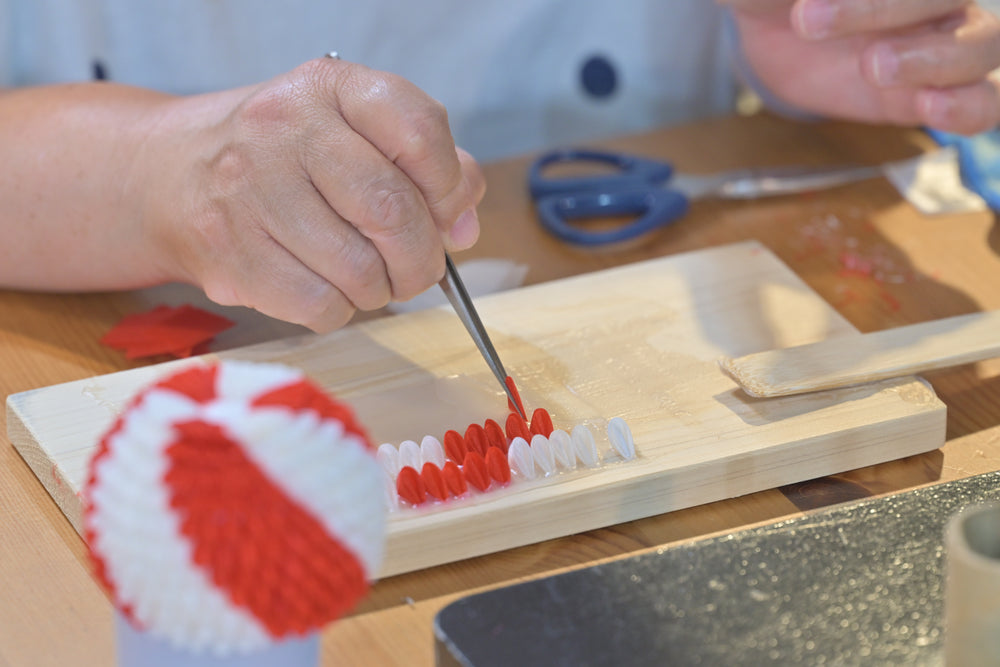
The angle of the tweezers, the amount of glue, the "breathing" of the fabric.
I believe that the greatest value of in-person classes is the ability to directly convey these sensory details that cannot be expressed numerically.
Classroom Concept
Beautifully, a single petal
At Oharibako, we prioritize "learning correctly" above all else.
All fabrics used are domestically produced pure silk.
Tango chirimen, Nagahama chirimen, and habutae.
These are authentic materials dyed by Kyoto dyers.
By practicing with authentic materials from the start, your handling of fabric, precision in folding, and the beauty of the finished product will all develop in the right direction.
In the beginner course, you will learn fundamental tsumami zaiku techniques such as maru-tsumami (round petals) and ken-tsumami (pointed petals).
In the intermediate course, you will master cutting and assembly, and in the advanced course, you will challenge yourself with authentic classical kanzashi using 6-momme habutae.
Step by step, with certainty.
Acquire skills here that you can continue to use for a long time.
Classroom features

Small-group lessons
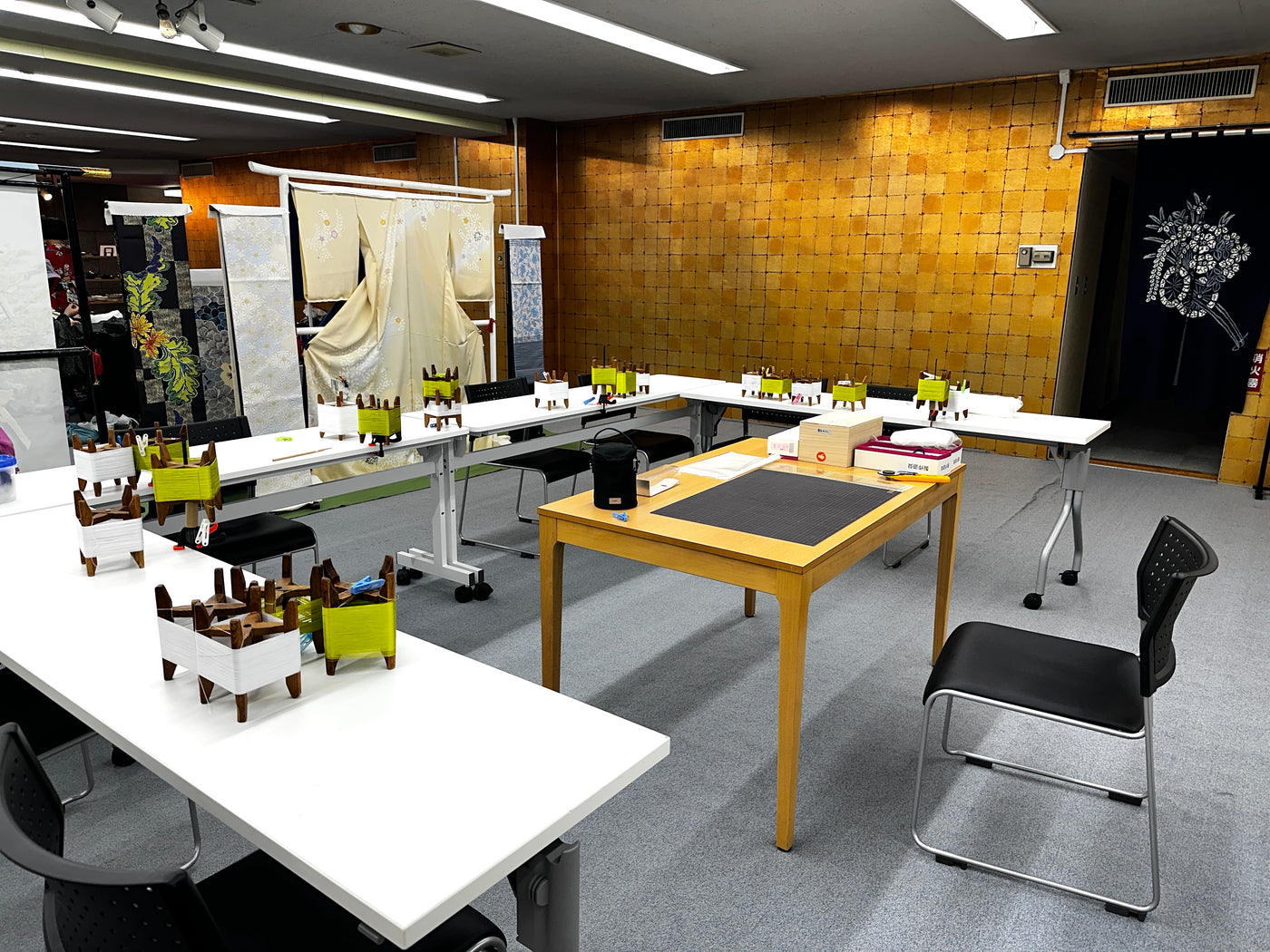
Tokyo classes are small, with 5 to 12 students.
This allows us to observe each student's work and provide immediate feedback.
The strength of small classes is the ability to work together to understand "why something isn't working" and find solutions.
Even complete beginners are welcome to join us with confidence.

Traditional paste-resist dyeing
We use traditional materials and techniques that have remained unchanged for 200 years.
When things don't go well, there's always a reason.
The direction of the fabric, the amount of paste, the angle of the tweezers.
We logically explain "why we do things the way we do" and answer your questions carefully until you are satisfied.
You master techniques to the extent that you understand them.

Freedom of creative activities
Our studio does not issue qualifications or certifications.
We believe that no qualification is necessary to enjoy Tsumami-zaiku.
You are completely free to create and sell works using the techniques you've learned, or to teach them to others.
How you utilize the skills you acquire is entirely up to you.

Call for next term's applications
Please wait until the end of the year.
To prevent you from realizing "Oh, it's already closed," we'll send out the next recruitment announcement via our official LINE account. If you let us know your preferred class (Kyoto, Tokyo, or Online), we'll notify you first when registration opens.
*There will be no new recruitment for the Spring/Summer 2027 Kyoto class.
*The Tokyo class will be open for applications for the first time in a year for the Spring/Summer 2027 course.
*Recruitment for the Spring/Summer 2027 Zoom class is yet to be determined.

First, let's thoroughly master the fundamentals.
Introductory Course
In the beginner's course, you will thoroughly learn the basics of round-petal folds, pointed-petal folds, double round-petal folds, and double pointed-petal folds.
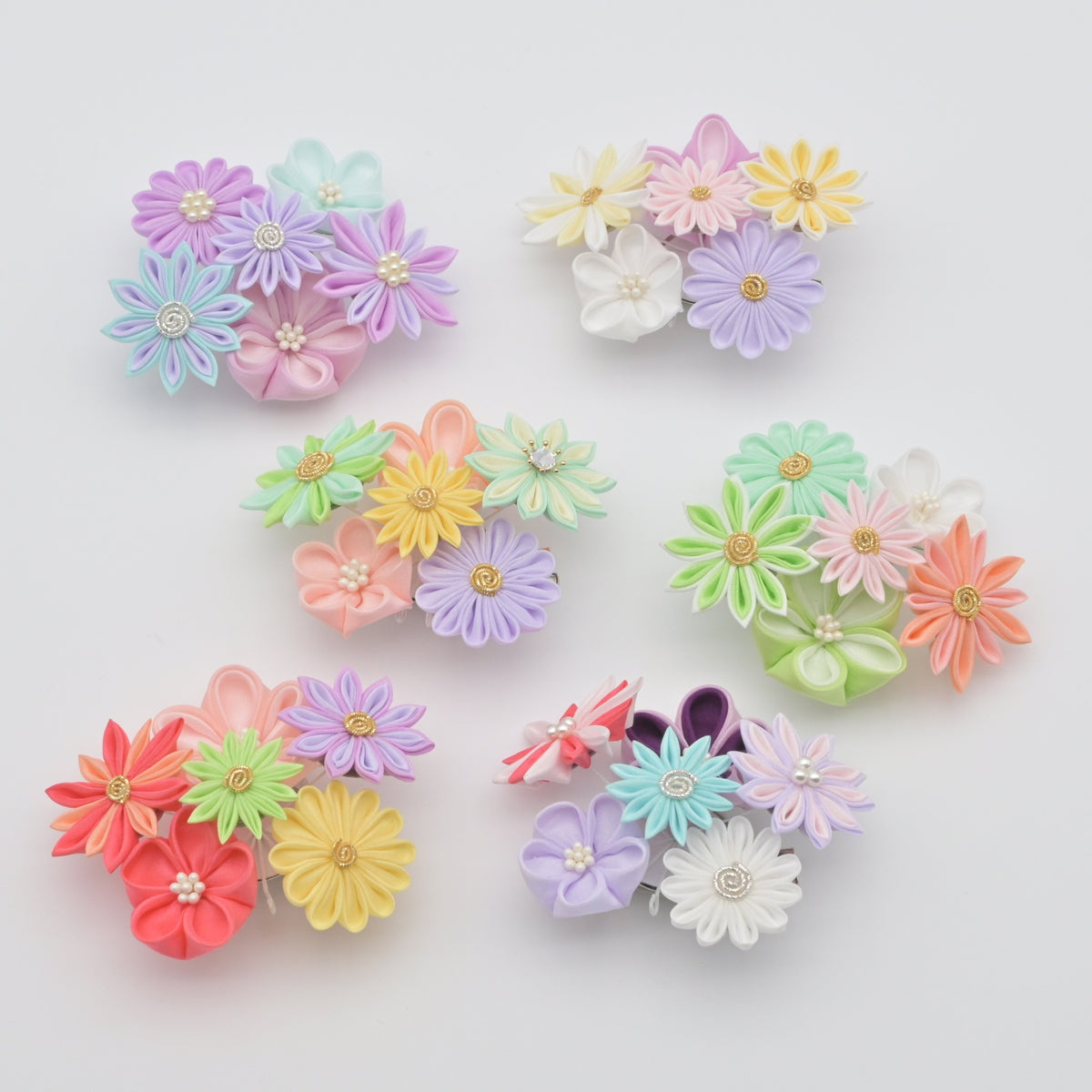
In the first three sessions, you will repeatedly practice the basics of folding, and in the latter three sessions, you will create a bouquet clip with a cascading streamer attached to a six-flower bouquet that you have color-coordinated yourself.
Many people make the pieces created in the latter half of the course into hair ornaments for their daughters' or granddaughters' Shichi-Go-San celebrations or Coming-of-Age ceremonies.
By the time you finish the beginner's course, you will be able to expertly create basic flowers such as plum and chrysanthemum, as well as wisteria streamers using adhesive.

Let's learn some skills other than drinking snacks.
Intermediate Course
In the intermediate course, we will delve into techniques other than Tsumami, such as cutting, assembling, color arrangement, and roofing (assembly) of continuous multiple-petal pieces.
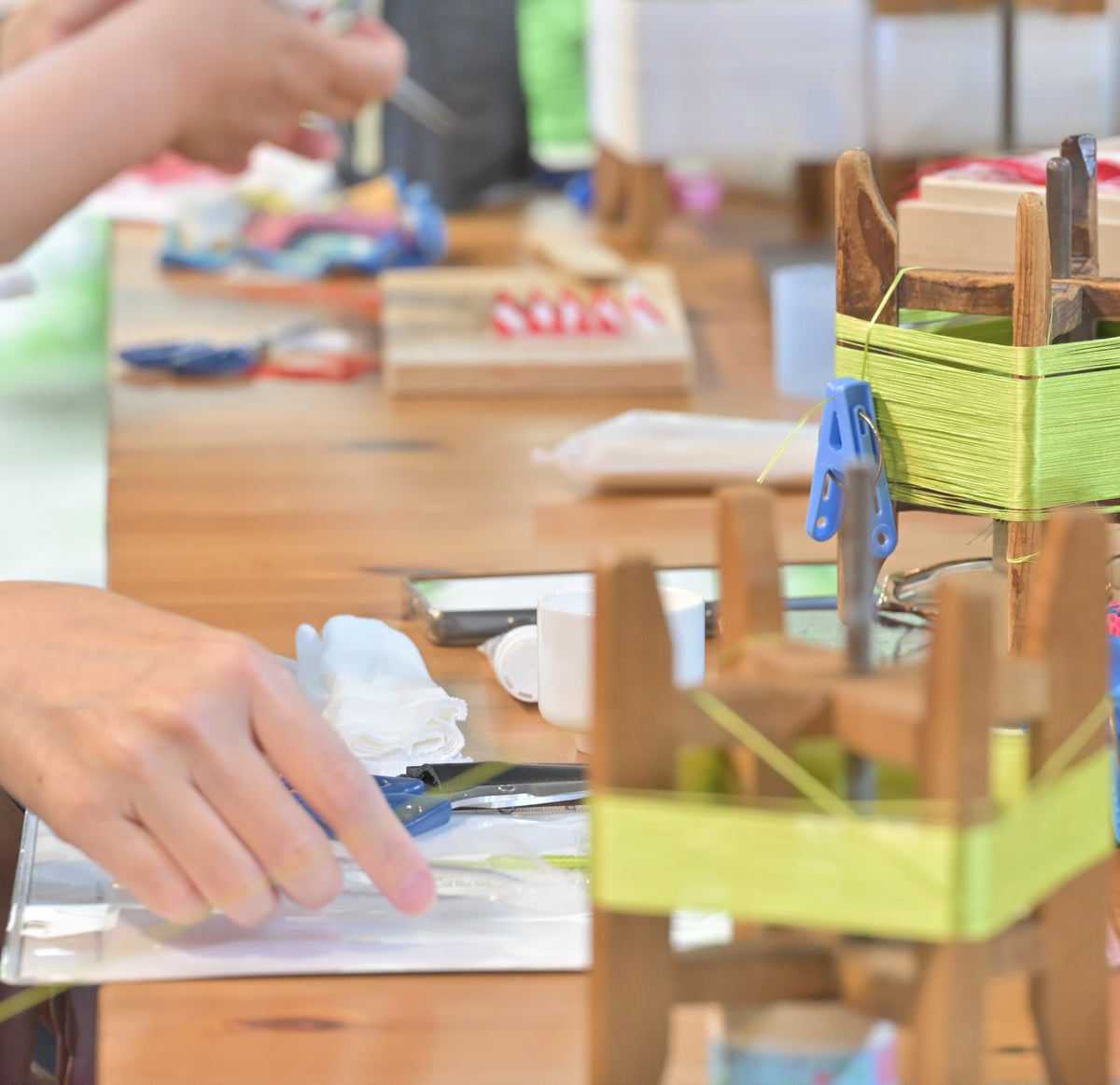
Tsumami Zaiku often involves many steps other than the actual Tsumami pinching. In particular, you can learn Oharihako's unique technique for assembly using a thread frame.
Finally, you will create a pine, bamboo, and plum hairpin, which serves as an introduction to classical works. You will not only use the 10 momme fabric you've been working with, but also use 6 momme habutae for the first time, assembling it onto a hairpin base and acquiring the fundamental skills to create authentic pieces.

Finally taking on the classics!
Advanced Course
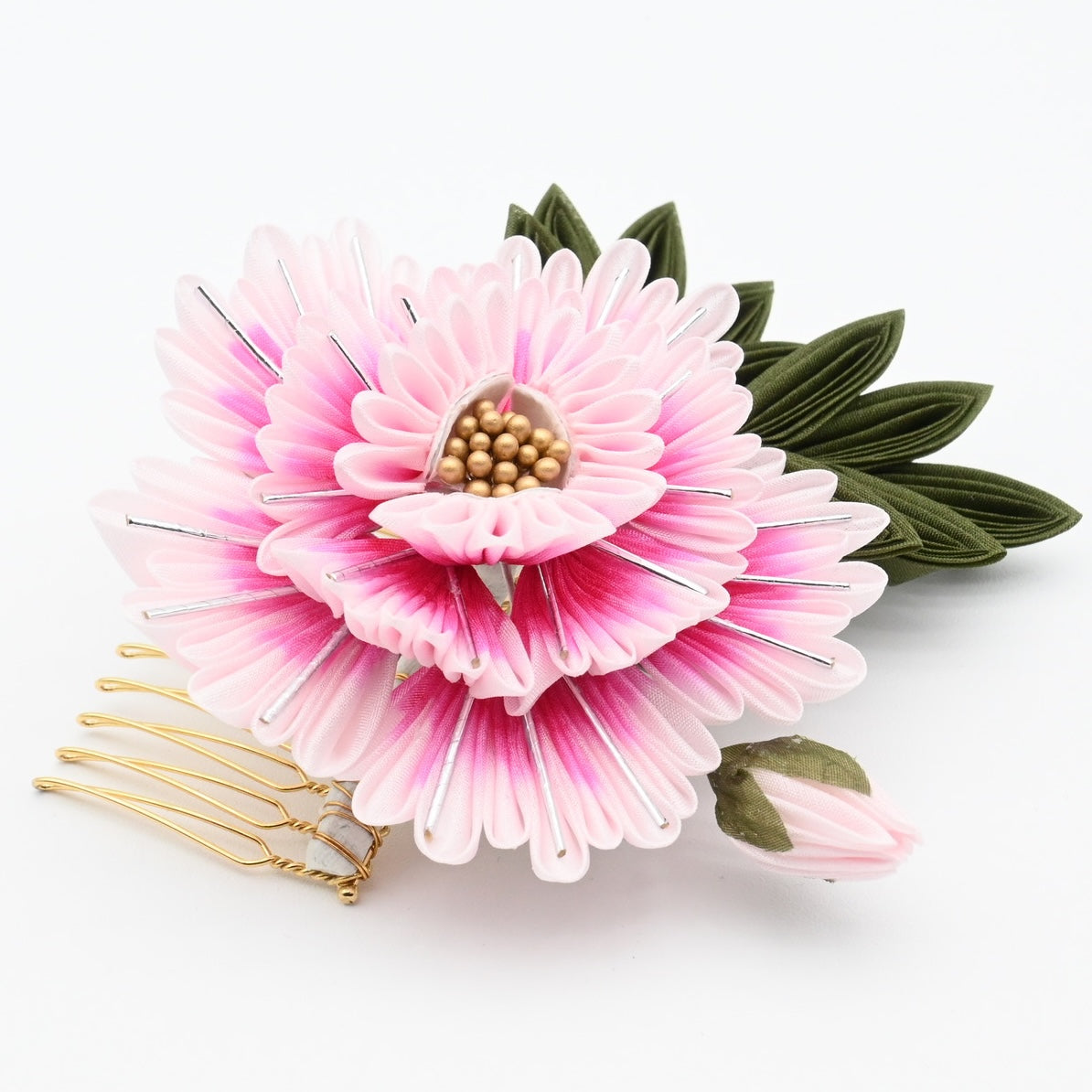
Finally, we will tackle the challenge of creating works based on classical pieces. Using the techniques cultivated in the beginner and intermediate courses, we will produce seasonal motif pieces over several sessions.
This includes not only tsumami work, but also creating bases, assembling components, and sometimes making motifs other than flowers, or creating branches and fans.
While there will be more to do, the sense of creating a masterpiece with time and effort is unique to the advanced course.
The works differ between the spring/summer course and the autumn/winter course, so you can enjoy them year-round at your own pace.

Challenging a classic masterpiece
Alumni lectures
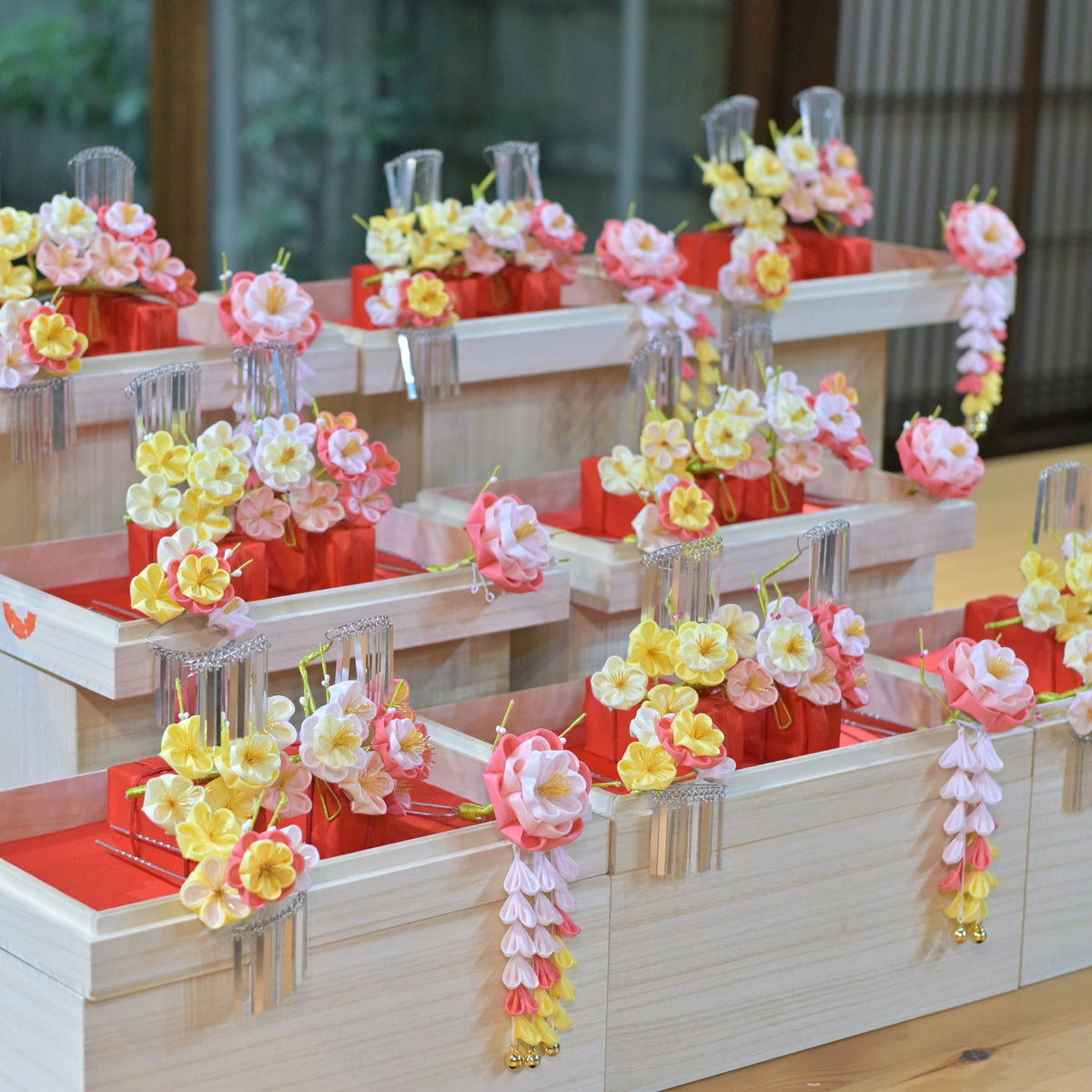
Upon completing the advanced level, optional challenge pieces await. These masterpieces, crafted over an entire season, include pieces that are now rarely made, such as kusudama kanzashi and maiko hanagushi, as well as special assembled pieces like the Shichi-Go-San Katsuyama.
The number of challenge pieces in the graduate course increases gradually each year, allowing you to take them on at a comfortable pace and enjoy Tsumami Zaiku for a long time.
While some pieces may require over 600 individual elements, let's bring together all the techniques you've learned and aim for the pinnacle of Tsumami Zaiku!


Cultural community experiences through Tsumami-zaiku
The Oharibako classroom is not only a place to learn techniques but also a place to foster connections.
Art projects where students create works together.
Annual year-end and New Year parties. In the open chat exclusively for students,
joint purchases of materials and limited edition items.
Furthermore, for those interested, we also offer art tours to visit the workshops of artisans in Kyoto.
Through each experience, you will meet fellow tsumami zaiku lovers and expand your creative world.
In the classroom, you learn more than just techniques.
Experience the traditional craft culture of Kyoto together with us.
Frequently Asked Questions
よくある質問
ご質問
Our Zoom lessons can be attended by participants from overseas.
We currently have students living abroad taking our courses.
For in-person classes, make-up lessons can be arranged by adjusting the schedule (a make-up lesson fee is required).
For Zoom classes, you can attend via archive or transfer to another session.
Of course, you can participate.
This is a workshop where anyone can enjoy Tsumami Zaiku, regardless of gender.
Most participants start with no prior experience.
We will carefully teach you the basics, such as how to hold tweezers and use glue,
so even first-timers can join with confidence.
It depends on where you are. Orders processed here will take 5-7 business days to arrive. Overseas deliveries can take anywhere from 7-16 days. Delivery details will be provided in your confirmation email.
While we generally recommend participation for junior high school students and above, elementary school students may be able to join if they already have a certain level of experience.
Please contact us individually for more information.
Zoom courses are available for archive viewing.
They can be viewed for one and a half years after upload.
This is convenient for review or if you miss a session.